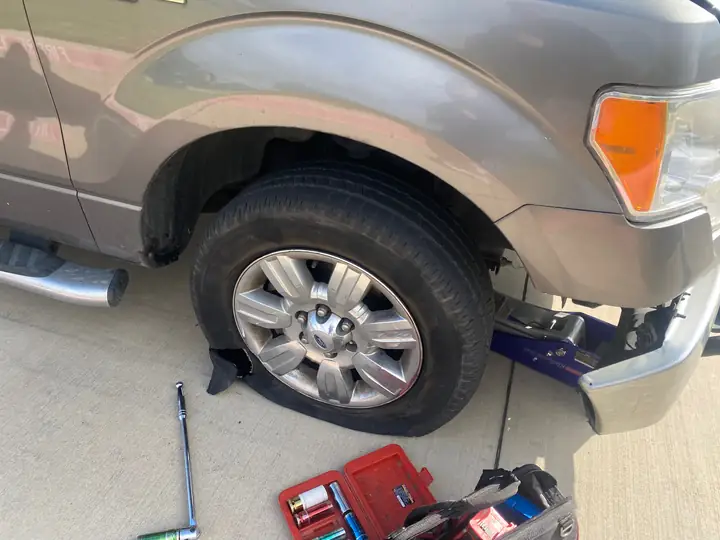
DIY Tire Plug: Temporary Fix for Flats in Dallas Traffic
Stuck with a slow leak on I-30 or I-20 during rush hour? A tire plug kit can get you safely off the highway and to a tire shop. Here's how to use one correctly in Dallas-Fort Worth traffic conditions.
When a Tire Plug Is (and Isn't) Safe
Safe to Plug:
- Puncture in tread area only (center of tire)
- Hole diameter ¼ inch (6mm) or smaller
- Single puncture (not multiple holes)
- No visible tire damage around hole
Never Plug:
- Sidewall damage — always replace tire
- Holes larger than ¼ inch
- Shoulder area (transition between tread and sidewall)
- Tires with bulges, cracks, or other damage
- Run-flat tires (require professional repair)
DIY Tire Plug: Step-by-Step for DFW Drivers
Step 1: Get to Safety (Critical in DFW Traffic)
- • Pull completely off highway — use service road or parking lot if possible
- • On highways like I-30, I-20, or 360, move to widest shoulder
- • Turn on hazard lights
- • Set parking brake and place wheel chocks if available
- • If traffic is heavy or shoulder is narrow, call mobile service instead
Step 2: Locate the Puncture (2 minutes)
- Listen for hissing — air escaping makes a distinct sound
- Spray soapy water around suspected area — bubbles indicate leak
- Mark the spot with chalk or marker
- Check for nail/screw — leave it in place for now
Step 3: Prepare the Hole (3 minutes)
- Remove the nail/screw with pliers — pull straight out
- Use the reamer tool (included in plug kit):
- Insert reamer into hole
- Push and twist 5-10 times to clean and roughen edges
- This helps plug adhere
- Leave reamer in hole temporarily to keep dirt out
Step 4: Insert the Plug (2 minutes)
- Thread plug strip through insertion tool eye (should be centered)
- Apply rubber cement to plug (if included in kit)
- Remove reamer and immediately insert plug tool
- Push plug in until only ½ inch remains outside
- Twist tool 90° and pull straight out — plug stays in tire
- Trim excess plug flush with tire surface using knife
Step 5: Reinflate & Test (3 minutes)
- Connect portable air compressor to valve stem
- Inflate to recommended PSI (check door jamb sticker)
- Spray soapy water on plug — no bubbles = sealed
- Listen for leaks while inflating
Post-Repair: Getting to a Tire Shop
A plug is a temporary fix. Drive cautiously to the nearest tire shop:
- Speed limit: Max 50 mph until professional repair
- Check PSI frequently — recheck after 5 miles
- Avoid highways if possible — use service roads
- Get permanent patch within 24 hours (patch from inside is proper fix)
DFW Traffic Tip:
If your flat happens during rush hour on I-635, I-30, or Central Expressway, plugging on the shoulder is risky. David's Tire and Battery offers mobile tire service — we'll come to you with professional equipment. Safer than DIY in heavy traffic.
When to Skip DIY and Call a Pro
Some situations require mobile tire service instead of DIY:
- Heavy traffic areas: I-35E through Dallas, I-20 near Arlington, 360 Tollway
- Nighttime on highways: Low visibility makes DIY dangerous
- Multiple punctures: Indicates a bigger problem
- Completely flat tire: Plug kits work best on slow leaks, not total flats
David's Mobile Tire Service
Available 24/7 across Dallas, Fort Worth, Arlington, Irving, Garland, Plano, Frisco, McKinney, and all DFW cities. We bring professional tire repair and replacement equipment to your location — highway shoulder, parking lot, or home. Call 682-267-0991 anytime.
Tools to Keep in Your Trunk
- Tire plug kit ($10-15 at AutoZone, O'Reilly, Walmart)
- 12V portable air compressor
- Digital tire pressure gauge
- Pliers and utility knife
- Spray bottle with soapy water
- Flashlight (for nighttime repairs)
- Safety gloves
Frequently Asked Questions
Flat Tire in DFW?
Skip the roadside DIY — call for fast mobile tire service