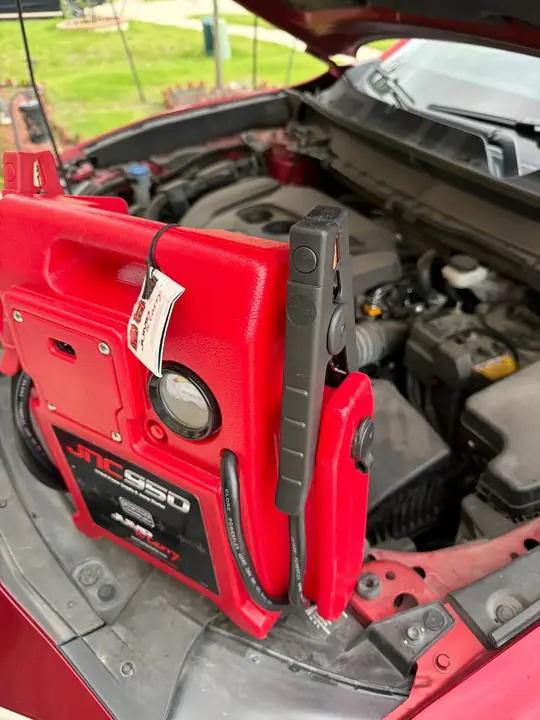
When Jump Starts Fail: Signs You Need a Battery Replacement
You got a jump start, drove for 20 minutes, turned off your car—and now it's dead again. Sound familiar? When jump starts fail repeatedly, it's time to diagnose the root cause. Here's how to know if you need a battery, alternator, or professional help.
3 Reasons Jump Starts Fail
Reason #1: Battery Is Completely Dead
If your battery has zero voltage (below 10V), a jump start may get the car running temporarily, but the battery can't hold a charge anymore.
What to do: Replace the battery. Driving won't recharge a battery with failed cells.
Reason #2: Alternator Isn't Charging
The alternator recharges the battery while the engine runs. If it's failing, the battery drains even while driving.
Test: While engine is running, check voltage at battery terminals. Should read 13.8-14.4V. Below 13V = failing alternator.
Reason #3: Parasitic Drain
Something (interior light, trunk light, aftermarket stereo, alarm) is draining the battery when the car is off.
Test: Disconnect battery overnight. If it holds charge, you have a parasitic drain. Check glove box light, trunk light, and aftermarket accessories.
Decision Tree: Battery vs Alternator vs Parasitic Drain
Scenario 1: Car Dies Immediately After Jump
Likely cause: Dead battery with no capacity left
Solution: Replace battery
Test: Check voltage after jump—if below 12V within 5 minutes, battery is toast
Scenario 2: Car Runs Fine, Then Dies After Parking Overnight
Likely cause: Parasitic drain or old battery
Solution: Check for interior lights left on, test battery age (replace if 3+ years old)
Test: Disconnect battery negative cable at night, reconnect in morning—if car starts, parasitic drain confirmed
Scenario 3: Car Dies While Driving or Idling
Likely cause: Failing alternator
Solution: Replace alternator
Warning signs: Dashboard battery light on, headlights dimming at idle, electrical accessories cutting out
How to Test Battery vs Alternator (DIY)
Battery Test (Multimeter Required)
- Turn off engine, wait 2 hours (or test in morning)
- Set multimeter to 20V DC
- Touch red probe to positive (+), black to negative (−)
- Read voltage:
- 12.6V+ = healthy battery
- 12.4V = 75% charged, may need replacement soon
- 12.0V or below = replace immediately
Alternator Test (Engine Running)
- Start engine (jump start if needed)
- Let engine idle
- Test voltage at battery terminals while running
- Read voltage:
- 13.8-14.4V = alternator working properly
- Below 13V = alternator not charging, needs replacement
- Above 15V = voltage regulator failure, can damage battery
When to DIY vs Call Professional Help
Safe to DIY:
- Battery is 3+ years old and failing voltage test
- You have jumper cables and a donor car or jump pack
- You're in a safe location (home, well-lit parking lot)
- Car has no other electrical issues
Call Professional Help If:
- You're on a busy highway (I-30, I-35, I-20, 360 in DFW)
- Car has smart key/push-button start (sensitive electronics)
- Alternator is suspected (requires replacement, not just jump)
- Battery is cracked, leaking, or swollen
- You've already tried 2+ jump starts today
David's Mobile Battery & Alternator Service
We test batteries and alternators on-site with professional equipment. If replacement is needed, we install new batteries or coordinate alternator repairs—all at your location. Serving Dallas, Fort Worth, Arlington, Irving, Plano, Frisco, and all DFW. Call 682-267-0991 for 24/7 mobile service.
Frequently Asked Questions
Jump Start Failed in DFW?
Mobile battery testing and replacement—we diagnose and fix the problem